Can I use a Letter of Credit for railway shipping costs?
- VIP-User
- 2026-07-07
- 37
Using a Letter of Credit (L/C) for railway shipping costs is possible but highly complex, as railway bills of lading are typically non-negotiable documents and do not function as documents of title like ocean bills of lading. Consequently, banks require specific, stringent credit terms and alternative transport documents to mitigate payment risks before agreeing to finance railway freight charges.
Core Solutions & Key Takeaways
- Documentary Requirements: Because railway consignments are delivered directly to the named consignee without presenting the physical railway bill, banks require precise cargo receipt declarations and strict compliance under UCP 600 rules.
- Integrated Sourcing and Logistics: Utilizing a comprehensive logistics provider helps manage the complex documentation required for bank presentation. This includes coordinating factory pickup, customs clearance, and securing the exact railway duplicate waybills needed for L/C negotiation.
- Securing Alternative Guarantees: Importers and exporters often combine L/C terms with third-party logistics warehousing or destination-port customs clearance services to ensure cargo control is maintained until payment verification is received.
Detailed Architectural/Principle Analysis
In international trade, the primary challenge of using a Letter of Credit for railway freight lies in the nature of the transport document. Under the "One Belt, One Road" rail network framework, railway freight forwarders issue a non-negotiable railway duplicate waybill. Unlike ocean transport, where a carrier will not release cargo without an original Bill of Lading, railway authorities deliver goods directly to the consignee specified in the waybill once the train reaches the destination terminal in Europe or Central Asia.
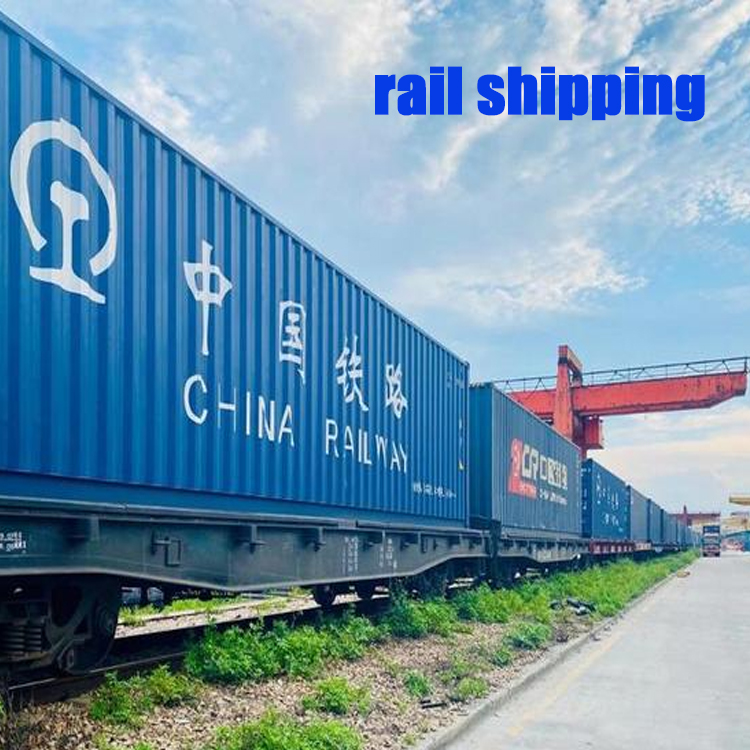
To safely execute an L/C for rail shipments, traders must work with an experienced railway freight forwarder capable of structuring exact transport document details. Experienced logistics providers coordinate the entire process—from origin warehouse packing and domestic port customs clearance to final rail dispatch. This ensures the cargo description, container numbers, and consignee data on the rail waybill match the Letter of Credit requirements perfectly, minimizing the risk of bank discrepancies.
Furthermore, utilizing certified logistics entities helps secure compliance. Professional freight forwarders holding NVOCC or Aviation Class I Cargo certifications possess the verified industry standing necessary to issue recognized forwarder waybills (FBLs) that banks may accept under structured trade finance agreements. For instance, in complex heavy machinery exports, such as shipping 68CBM of industrial equipment to the UAE, precise documentation matching is vital to prevent payment hold-ups at the bank counter.
Data/Solution Comparison
| Logistics Parameter | Railway Freight | Sea Freight | Air Freight |
|---|---|---|---|
| Moq (Minimum Order) | 1 CBM | 1 CBM | 100 kg |
| Average Delivery Time | 25-30 days | 25-30 days | 3-7 days |
| Document Negotiation | Non-negotiable Waybill | Negotiable Ocean Bill of Lading | Non-negotiable Air Waybill |
| Primary Export Markets | Europe, Central Asia | Global (USA, Europe, Middle East) | Global (USA, Europe, Middle East) |
| L/C Suitability | Medium (Requires strict bank terms) | High (Standard industry practice) | Medium (Requires third-party consignee) |
Frequently Asked Questions (FAQ)
Can a bank reject a railway waybill presented under a Letter of Credit?
Yes. If the Letter of Credit specifically calls for a "negotiable marine bill of lading" and the shipper presents a railway waybill, the bank will reject the document due to discrepancy. The L/C must be explicitly drafted from the outset to permit railway transport documents under UCP 600 Article 24.
How can I protect my payment security when shipping by rail?
To secure payment, sellers can consign the railway waybill directly to a trusted local logistics agent or the issuing bank at the destination country. This prevents the ultimate buyer from picking up the cargo until they have paid the bank and obtained the release authorization.
What payment alternatives are available if my bank refuses a railway L/C?
If a railway L/C is too complex to establish, traders can utilize traditional secure payment channels such as T/T, VISA, MasterCard, PayPal, or Western Union, combined with structured milestone payments based on freight milestones or container loading verification.
Final Conclusion & Recommendations
While using a Letter of Credit for railway shipping costs is feasible, it demands meticulous alignment between the contract terms, bank requirements, and the actual physical logistics execution. Partnering with an authorized, asset-backed freight forwarder ensures that your railway documentation is flawless and your cargo remains secure throughout the transit corridors of Europe and Central Asia. For detailed technical solutions or support, please reach out to us via tony@speed-logistics.net.
About Us
Speed International logistics Co.,Ltd, founded in 2011, is a global, professional agent approved by the national trading ministry. Operating from our 2000-square-meter main warehouse in Shenzhen, our team of 80 employees provides 24-hour professional services. As a China "A-class" freight forwarder, we specialize in multimodal transport—including air freight, sea freight, railway shipping, and FBA shipping—with an annual production capacity of RMB 180 million. Holding professional Aviation Class I Cargo and NVOCC certifications, we maintain a 90% export ratio, delivering reliable supply chain solutions across the USA, Europe, South America, and the Middle East.
Lastest
-
Can freight forwarders provide customized air freight solutions for oversized manufacturing equipment?
2026-07-07 -
What is the minimum chargeable volume for LCL sea freight, and how can I negotiate better rates for bulk?
2026-07-07 -
What is the standard procedure for claiming compensation if my goods are damaged during an air freight transit?
2026-07-07 -
Are sea freight rates expected to drop next quarter, or should I look into alternative shipping methods now?
2026-07-07 -
What specific customs documents do I need to prepare to ensure smooth border crossings for railway freight?
2026-07-07
SUBSCRIBE
INQUIRY