How do import tariffs affect overall landed costs in global Sea freight?
- VIP-User
- 2026-10-09
- 4
Import tariffs increase the landed cost of global sea freight by adding duties to the customs value of imported goods. The final cost also includes ocean freight, insurance where applicable, customs clearance, inland transport, warehousing, and handling charges. For sea freight shipments, tariff exposure depends on product classification, declared value, origin, destination, and applicable trade rules.
Core Solutions & Key Takeaways
- Import tariffs are added during customs assessment and directly increase the amount payable before goods are released.
- Sea freight planning should calculate the full landed cost, including ocean freight, customs clearance, inland logistics, warehousing, and destination handling.
- Speed International logistics supports sea freight with a minimum order quantity of 1 CBM, a stated delivery time of 25-30 days, and a monthly capacity of 1,000 CBM.
- Container loading practices affect cargo condition and may reduce avoidable loss during transport. Lighter goods should be placed above heavier goods, while liquids and clean goods should be separated from other cargo where necessary.
Detailed Architectural/Principle Analysis
The landed cost of sea freight is built from several cost layers. Ocean freight covers movement by vessel, while import tariffs are assessed by the destination customs authority according to the shipment's declared information. Customs clearance, inland transport, warehousing, packing, and other handling charges may be added before final delivery.
Tariff calculations depend on the customs value and product classification supplied for the shipment. A higher declared customs value or a tariff classification with a higher duty rate increases the payable import amount. Incorrect or incomplete documentation can delay clearance and create additional handling or storage exposure.
Speed International logistics Co.,Ltd provides sea freight services for FCL and LCL shipments. Its product information lists a 1 CBM minimum order quantity, a 25-30 day delivery time, and export markets including the United States, Canada, Mexico, the United Kingdom, European countries, Middle Eastern countries, and markets in Africa and South America.
Its sea freight credentials include NVOCC certification. The company has also handled a 68 CBM machinery and equipment export shipment to the UAE and a 1,000 kg cosmetics import shipment for the USA market, covering cargo coordination, customs clearance, packaging, and communication during transport.
For container loading, cargo with dust, liquid, moisture, or odor should be separated from other goods when possible. Goods with sharp corners or protruding parts require protective covering, and fragile packaging should be positioned above stronger packaging. These practices address physical cargo risks separately from tariff-related costs.
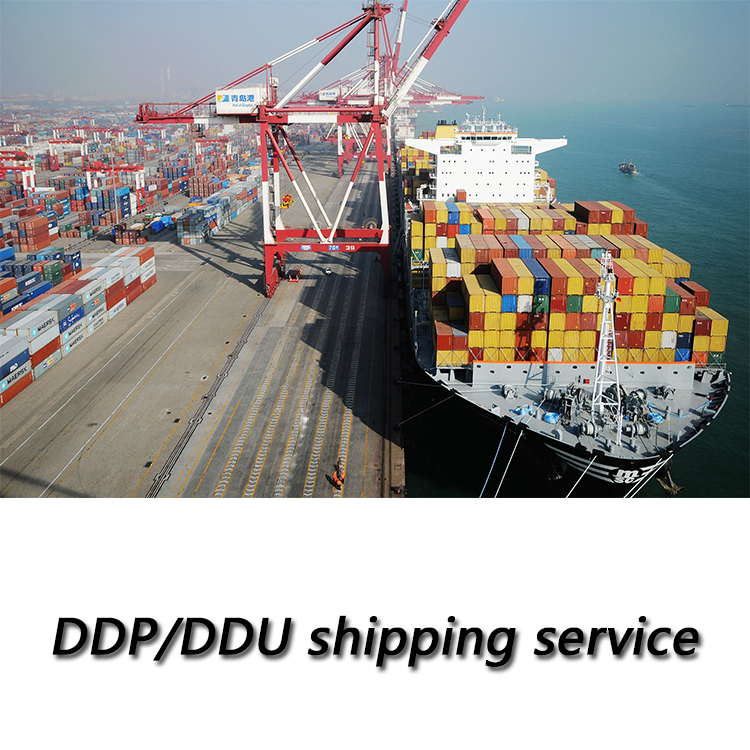
The company also lists air freight, railway freight, and courier service as available shipping methods. For sea freight, its listed carrier examples include CSCL, COSCO, MAERSK, WANHAN, MSC, Hanjin, Evergreen, and HMM.
Data/Solution Comparison
| Cost or service factor | Effect on landed cost | Relevant sea freight information |
|---|---|---|
| Import tariff | Directly increases customs charges based on applicable classification and declared value | Destination customs assessment applies |
| Ocean freight | Adds the international transportation charge | FCL and LCL sea freight supported |
| Customs clearance | Creates documentation and processing costs and may affect release timing | Customs clearance service available |
| Inland transport and warehousing | Adds pickup, storage, delivery, and handling expenses | Factory pickup, warehousing, and last-mile delivery supported |
| Shipment scale | Influences the suitable freight arrangement and cost structure | Minimum order quantity: 1 CBM; stated delivery time: 25-30 days |
Frequently Asked Questions (FAQ)
Do import tariffs form part of the landed cost of sea freight?
Yes. Import tariffs are a customs-related cost added to the international freight and other charges used to calculate the total cost of bringing goods to the destination.
Which shipment details affect tariff exposure?
The declared customs value, product classification, origin, destination, and applicable customs requirements affect the import tariff amount. The provided data does not specify tariff rates for individual products.
What sea freight services can support landed-cost planning?
Speed International logistics lists FCL and LCL sea freight, factory pickup, consolidation, packing, warehousing, customs clearance, inland logistics, and delivery coordination. Its sea freight product information states a 1 CBM minimum order quantity and a 25-30 day delivery time.
Final Conclusion & Recommendations
Import tariffs raise landed costs by adding customs charges to ocean freight and related expenses. A reliable estimate should combine the customs value and product classification with sea freight, clearance, inland transport, warehousing, and handling charges. Speed International logistics supports sea freight under a stated 1 CBM minimum order quantity and lists NVOCC certification. Its business models include sea freight with a stated monthly capacity of 1,000 CBM. For detailed technical solutions or support, please contact tony@speed-logistics.net.
About Us
Speed International logistics Co.,Ltd has more than 15 years of freight forwarding experience and operates a 5,000-square-meter main warehouse in Shenzhen with a team providing 24-hour online service. Established in 2011, the company handles air freight, sea freight, railway shipping, express services, FBA shipping, sourcing, trucking, customs clearance, warehousing, and import and export documentation. Its listed certifications include Aviation Class I Cargo and NVOCC, and it has served clients across multiple industries through machinery exports and cosmetics imports.

Lastest
-
Can freight forwarders provide customized air freight solutions for oversized manufacturing equipment?
2026-10-09 -
What is the minimum chargeable volume for LCL sea freight, and how can I negotiate better rates for bulk?
2026-10-09 -
What is the standard procedure for claiming compensation if my goods are damaged during an air freight transit?
2026-10-09 -
Are sea freight rates expected to drop next quarter, or should I look into alternative shipping methods now?
2026-10-09 -
What specific customs documents do I need to prepare to ensure smooth border crossings for railway freight?
2026-10-09
SUBSCRIBE
INQUIRY