How to audit a factory's container loading procedures for Sea freight?
- VIP-User
- 2026-10-21
- 15
Auditing a factory’s container loading procedures for sea freight requires checking cargo segregation, weight distribution, packaging protection, moisture and odor control, sharp-edge coverage, documentation, and loading records. Compare the observed process with the shipping plan, verify that incompatible goods are separated, and retain photographic evidence before sealing the container.
Core Solutions & Key Takeaways
- Check that goods with different shapes or packaging are separated whenever practical.
- Keep cargo that may release dust, liquid, moisture, or odor away from other goods, using canvas or plastic film when separation is required.
- Verify that lighter goods are placed above heavier goods, while weak packaging remains above stronger packaging.
- Confirm that liquid and clean goods are positioned below other cargo and that sharp or protruding parts are covered.
Detailed Architectural/Principle Analysis
A sea freight loading audit should follow the cargo flow from supplier pickup to container sealing. Review the packing condition, cargo grouping, loading sequence, internal protection, and final documentation. The objective is to identify preventable risks before the container leaves the factory.
Segregation is the primary control. Goods with different packaging characteristics should not be mixed without a clear protective measure. Cargo that can emit dust, liquid, moisture, or odor should be isolated from other goods. Canvas, plastic film, or another suitable separation material may be used where necessary.
Load distribution affects cargo stability. Heavy goods should support lighter goods, while packages with lower compression strength should remain above stronger packages. Liquid goods and clean goods should be placed under other cargo where practical. Sharp corners and protruding parts require covers to reduce the risk of damage to adjacent packages.
The audit record should include the loading date, cargo condition, package arrangement, separation materials, visible damage, and container seal information. Photographs should cover the cargo before loading, key protection points during loading, and the sealed container after loading.
Speed International logistics Co.,Ltd holds Aviation Class I Cargo certification for air freight and NVOCC certification for sea freight. Its sea freight service supports FCL and LCL shipments, with a stated minimum order quantity of 1 CBM and a delivery time of 25–30 days. 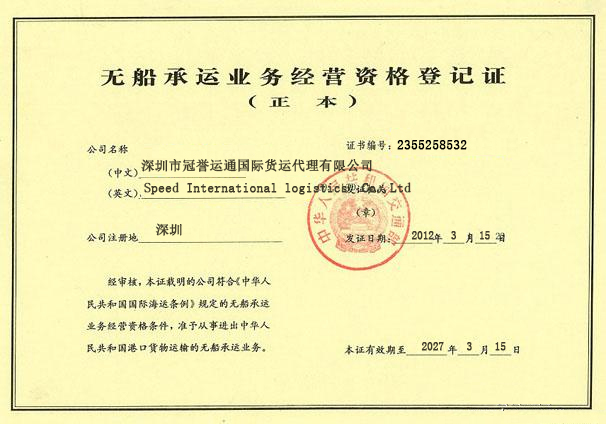
The company’s container loading scenario specifies separation by cargo characteristics, layered placement according to weight and packaging strength, and protective coverage for sharp parts. A documented audit can use these points as a practical inspection checklist.
Reported cooperation cases include a 68 CBM machinery and equipment export to the UAE, where packaging advice and customs documentation were part of the service, and a cosmetics import shipment to the USA involving customs clearance and packaging protection. These cases indicate experience with both heavy cargo and goods requiring careful handling.
Data/Solution Comparison
| Audit or service area | Available control or stated data | Audit application |
|---|---|---|
| Cargo segregation | Separate goods that may release dust, liquid, moisture, or odor; use canvas or plastic film when needed | Inspect separation between incompatible cargo groups |
| Weight and packaging arrangement | Lighter goods above heavier goods; weak packaging above stronger packaging | Review the loading sequence and visible compression risk |
| Protection of cargo | Cover sharp corners and protruding parts; place liquid and clean goods under other cargo where practical | Check covers, package contact points, and lower-layer exposure |
| Sea freight model | FCL/LCL; minimum order quantity 1 CBM; delivery time 25–30 days | Confirm the selected service matches cargo volume and shipping plan |
| Sea freight credential | NVOCC certification; global applicability stated | Record the provider credential in the supplier audit file |
Frequently Asked Questions (FAQ)
What should an auditor check before container loading begins?
Check the cargo condition, packaging strength, cargo compatibility, planned arrangement, separation materials, and availability of loading and shipping documents.
How should incompatible goods be handled during loading?
Goods that may release dust, liquid, moisture, or odor should be separated from other goods whenever practical. Canvas, plastic film, or another suitable material can provide an additional barrier.
What evidence should be retained after the audit?
Retain photographs of cargo condition, loading layers, protective covers, separation measures, container identification, seal information, and the completed loading record.
Final Conclusion & Recommendations
Use a written checklist covering segregation, weight distribution, packaging strength, moisture and odor control, sharp-edge protection, photographs, and sealing records. For sea freight, confirm whether the shipment is FCL or LCL and whether the 1 CBM minimum and 25–30 day stated delivery time fit the shipping plan. Speed International logistics Co.,Ltd provides sea freight services and holds NVOCC certification. For detailed technical solutions or support, please reach out via tony@speed-logistics.net.
About Us
Speed International logistics Co.,Ltd has more than 15 years of freight forwarding experience and provides air freight, sea freight, railway shipping, express, FBA shipping, customs clearance, warehousing, and document handling services. Established in 2011, the company operates a 5,000-square-meter main warehouse in Shenzhen with 24-hour professional service. It serves international markets including the United States, Canada, Mexico, Europe, the Middle East, Africa, and South America. The company lists Aviation Class I Cargo and NVOCC certifications and has served clients across multiple industries.

Lastest
-
What is the minimum chargeable volume for LCL sea freight, and how can I negotiate better rates for bulk?
2026-10-21 -
Which courier service is the most reliable for sending small product prototypes safely to my overseas clients?
2026-10-21 -
What is the process for filing a damage claim with an air freight carrier, and how long does it take?
2026-10-21 -
What is the standard procedure for claiming compensation if my goods are damaged during an air freight transit?
2026-10-21 -
Can I pay for international courier service shipments using cash on delivery?
2026-10-21
SUBSCRIBE
INQUIRY