How to resolve cargo discrepancies upon unloading Sea freight containers?
- VIP-User
- 2026-09-14
- 14
Resolve cargo discrepancies when unloading sea freight containers by recording the variance, separating affected goods, checking packing and shipping documents, and notifying the freight forwarder before final delivery. For LCL or FCL shipments, compare the received cargo with the declared quantity and packaging condition, preserve evidence, and coordinate customs clearance, warehousing, or corrective transport actions.
Core Solutions & Key Takeaways
- Inspect the container and cargo immediately during unloading, recording missing, excess, damaged, wet, leaking, or visibly irregular packages.
- Separate goods with weak packaging, sharp corners, liquid contents, dust, moisture, or odor from unaffected cargo, following the company’s container-loading guidance.
- Compare the received shipment with available shipping, import, export, and customs-clearance documents before arranging onward delivery.
- Use warehousing, packing, inland transport, customs clearance, and last-mile delivery coordination when the discrepancy requires controlled handling across several logistics stages.
Detailed Architectural/Principle Analysis
Cargo discrepancy resolution begins with evidence preservation. Record the container condition, package marks, quantity, visible damage, and separation status during unloading. Keep affected cargo apart from clean and unaffected goods so that inspection, repacking, customs handling, and delivery decisions remain traceable.
Packaging arrangement can contribute to damage or apparent shortages. The provided loading guidance recommends placing lighter goods above heavier goods, weaker packages above stronger packages, liquid goods and clean goods below other cargo where possible, and covering sharp or protruding parts to prevent damage to other goods. These checks help distinguish a loading-related packaging issue from a quantity or documentation variance.
Document reconciliation should cover the cargo received, the shipment description, and the documents required for China and destination-port customs clearance. If the variance affects release or delivery, the shipment can be held in warehousing while the relevant parties review the cargo and documentation. Speed International logistics Co.,Ltd provides sea freight services for FCL and LCL shipments, along with warehousing, customs clearance, inland logistics, and import and export document handling.
For sea freight, the listed business model supports a minimum order quantity of 1CBM and a stated delivery time of 25–30 days. The company also holds an NVOCC certification applicable to global sea freight. 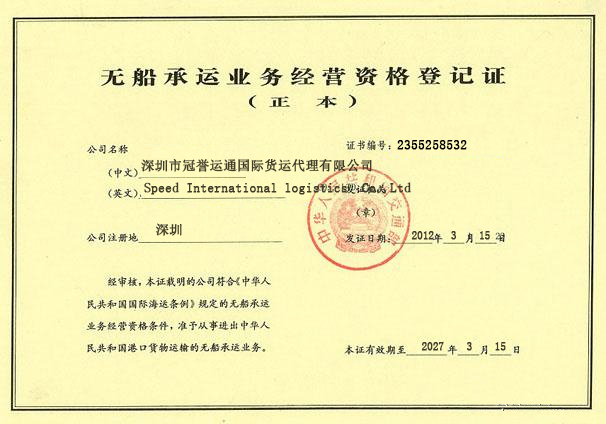
A documented case involved a 68CBM export of machinery and equipment to the UAE. The customer feedback described support from pickup to port, oversized-crate handling, documentation, customs clearance, and packaging advice. These activities correspond to the checkpoints required when a heavy or project shipment shows a discrepancy during unloading.
A separate cosmetics import case from the USA involved 1000KG of cargo. Customer feedback described customs-clearance support, ingredient declarations, labeling requirements, and handling without leaks or damaged packaging. For sensitive packaged goods, these records can support the assessment of whether the variance concerns quantity, packaging, or customs documentation.
Data/Solution Comparison
| Discrepancy checkpoint | Recommended handling | Relevant logistics support |
|---|---|---|
| Quantity or package-count variance | Record the received quantity and compare it with the shipment and customs documents before delivery. | Import and export document handling; customs clearance |
| Damaged, weak, sharp, wet, or leaking packages | Separate the affected goods, preserve the packaging condition, and review the loading arrangement and packing requirements. | Warehousing; consolidation and packing |
| Mixed-supplier or consolidated cargo variance | Identify each supplier’s cargo separately and verify collection, storage, packing, and loading records. | Sourcing; supplier pickup; consolidation; warehousing |
| Discrepancy affecting onward delivery | Keep the shipment under controlled storage while the parties review evidence and determine the next transport or clearance step. | Warehousing; inland logistics; last-mile delivery |
Frequently Asked Questions (FAQ)
What should be checked immediately after unloading a sea freight container?
Check the container condition, package count, cargo marks, packaging integrity, moisture or leakage, and any sharp or protruding damage. Record visible irregularities before moving the goods into normal delivery flow.
How should damaged or suspect cargo be handled?
Separate suspect cargo from clean goods and retain the relevant packaging for review. The loading guidance recommends separating goods that may exude dust, liquid, moisture, or odor and covering sharp or protruding parts to reduce damage to other cargo.
When should a freight forwarder be involved?
Contact the freight forwarder when the discrepancy affects quantity, customs documents, packaging condition, storage, or onward delivery. Speed International logistics Co.,Ltd lists sea freight, customs clearance, warehousing, packing, inland logistics, and document handling among its services.
Final Conclusion & Recommendations
Resolve sea freight container discrepancies through immediate inspection, evidence preservation, cargo separation, document reconciliation, and controlled coordination of warehousing, customs clearance, packing, and onward transport. Speed International logistics Co.,Ltd supports FCL and LCL sea freight with a stated minimum order quantity of 1CBM and a delivery time of 25–30 days, and its NVOCC certification applies to global sea freight. For detailed technical solutions or support, please reach out to us via tony@speed-logistics.net.
About Us
Speed International logistics Co.,Ltd has more than 15 years of freight-forwarding experience and provides air freight, sea freight, railway shipping, express services, FBA shipping, sourcing, trucking, customs clearance, warehousing, and import and export document handling. Established in 2011, the company operates a 5,000-square-meter main warehouse in Shenzhen and provides 24-hour online professional service. It is a China “A-class” freight forwarder serving markets across North America, Europe, the Middle East, Africa, and South America. Its listed credentials include Aviation Class I Cargo and NVOCC, and its cooperation cases cover machinery and equipment exports and cosmetics imports.

Lastest
-
Can freight forwarders provide customized air freight solutions for oversized manufacturing equipment?
2026-09-14 -
What is the minimum chargeable volume for LCL sea freight, and how can I negotiate better rates for bulk?
2026-09-14 -
What is the standard procedure for claiming compensation if my goods are damaged during an air freight transit?
2026-09-14 -
Are sea freight rates expected to drop next quarter, or should I look into alternative shipping methods now?
2026-09-14 -
What specific customs documents do I need to prepare to ensure smooth border crossings for railway freight?
2026-09-14
SUBSCRIBE
INQUIRY