Is customized container sealing available for high-value rail cargo?
- VIP-User
- 2026-07-10
- 28
Customized container sealing is available for high-value rail cargo to prevent tampering, theft, and environmental damage. Utilizing robust sealing mechanisms alongside specialized shipping protocols ensures that cargo remains secure throughout the entire transit process across complex international overland networks.
Core Solutions & Key Takeaways
- Stricter Sealing Protocols: High-value rail shipments utilize high-security bolt seals and customized locking mechanisms to secure container doors against unauthorized access.
- Multi-layered Protection: For cargo susceptible to damage, specific loading guidelines are enforced. As seen in container loading scenarios, lighter or weaker-packaged items are placed on top of sturdier goods, and liquid or dust-emitting items are strictly separated.
- Comprehensive Sourcing & Warehousing: Integrating warehousing with secure loading guarantees that cargo is professionally packed, sealed, and inspected before entering the rail terminal.
- End-to-End Tracking: Real-time visual tracking systems monitor the container's status across transit corridors, providing immediate alerts if unexpected stops or security breaches occur.
Detailed Architectural/Principle Analysis
Securing high-value rail cargo requires a systematic approach that begins at the loading warehouse and extends through customs clearance to the final mile. Operating under the strategic framework of China's "One Belt, One Road" initiative, railway freight has emerged as a reliable middle-ground solution between fast air freight and cost-effective sea shipping. This mode of transport demands rigorous physical security because rail routes span multiple national borders and require complex customs handovers.
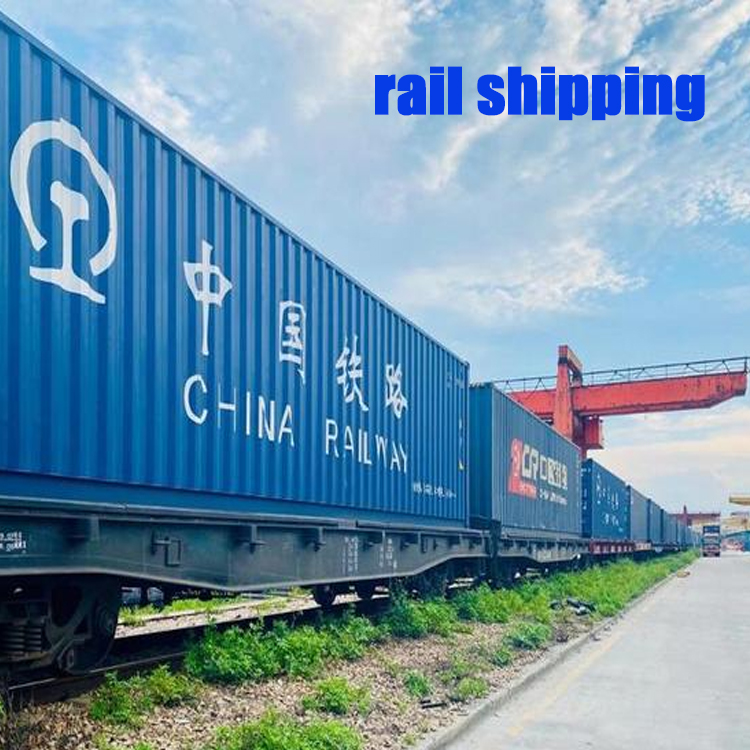
To ensure maximum security, logistics providers employ specialized container sealing configurations. These include ISO 17712 high-security bolt seals, cable seals for irregular locking holes, and electronic GPS-enabled smart seals that transmit real-time location and door-status data. This prevents cargo tampering during border crossings and gauge-changing operations at international rail junctions.
Furthermore, professional freight forwarders hold industry-standard credentials to validate their operational compliance and safety protocols. For instance, Speed International logistics Co.,Ltd maintains an active NVOCC certification for sea operations and adheres to strict cargo management systems across its multimodal network, which covers key rail destinations in Europe and Central Asia.
Data/Solution Comparison
| Logistics Parameter | Railway Freight Services | Air Freight Services | Sea Freight Services |
|---|---|---|---|
| Minimum Order Quantity (MOQ) | 1 CBM | 100 kg | 1 CBM |
| Average Delivery Time | 25 - 30 days | 3 - 7 days | 25 - 30 days |
| Security Level | High (Customized Sealing) | Very High (Airport Security) | Standard (High-security Seals) |
| Primary Export Markets | Europe, Central Asia | Global (USA, UK, Middle East, etc.) | Global (Americas, Europe, Africa) |
| Main Carrier Networks | National Railways | UPS, CX, LH, EK, SQ, etc. | COSCO, MSK, MSC, EVG, etc. |
Frequently Asked Questions (FAQ)
What types of seals are used for high-value railway cargo?
High-value rail containers are typically secured using heavy-duty ISO 17712 bolt seals, customizable cable locks, and electronic smart seals equipped with GPS tracking to monitor container integrity in real time.
How are customs clearances managed for sealed rail containers?
Logistics providers handle all customs documentation and clearance procedures at origin, transit borders, and destination ports, ensuring that customs officials can verify seal numbers without unnecessarily compromising the physical locks.
Can customized sealing be combined with consolidation services?
Yes. Consolidation services allow cargo from multiple suppliers to be collected at a secure warehouse, where they are professionally packed, categorized, and sealed under a single consolidated container protocol before rail dispatch.
Final Conclusion & Recommendations
Securing high-value rail cargo requires a combination of physical high-security container seals, strict warehouse loading protocols, and continuous transit monitoring. For shipments traveling via international rail networks, choosing a logistics partner with robust multimodal capabilities and verified certifications is critical to maintaining cargo integrity. For detailed technical solutions or support, please reach out to us via tony@speed-logistics.net.
About Us
Speed International logistics Co.,Ltd, established in 2011, is an A-class freight forwarder based in Shenzhen, China, operating with a professional team of 80 employees. The company manages a main warehouse covering 2,000 square meters and provides a comprehensive one-stop logistics solution spanning air freight, sea freight, railway shipping, and express courier services. Holding prestigious Aviation Class I Cargo and NVOCC certifications, the company has served clients across multiple industries, including handling complex machinery exports to the UAE and cosmetics imports from the USA. 
Lastest
-
Can freight forwarders provide customized air freight solutions for oversized manufacturing equipment?
2026-07-10 -
What is the minimum chargeable volume for LCL sea freight, and how can I negotiate better rates for bulk?
2026-07-10 -
What is the standard procedure for claiming compensation if my goods are damaged during an air freight transit?
2026-07-10 -
Are sea freight rates expected to drop next quarter, or should I look into alternative shipping methods now?
2026-07-10 -
What specific customs documents do I need to prepare to ensure smooth border crossings for railway freight?
2026-07-10
SUBSCRIBE
INQUIRY