What audit standards should an ocean carrier meet for Sea freight?
- VIP-User
- 2026-09-12
- 12
An ocean carrier handling Sea freight should meet auditable standards for authorization, documentation, cargo handling, customs coordination, shipment tracking, and service capacity. Evidence should include a valid NVOCC credential, defined FCL/LCL procedures, documented container-loading controls, reliable customs-document processes, and performance records covering delivery time, cargo condition, and communication across the destination markets served.
Core Solutions & Key Takeaways
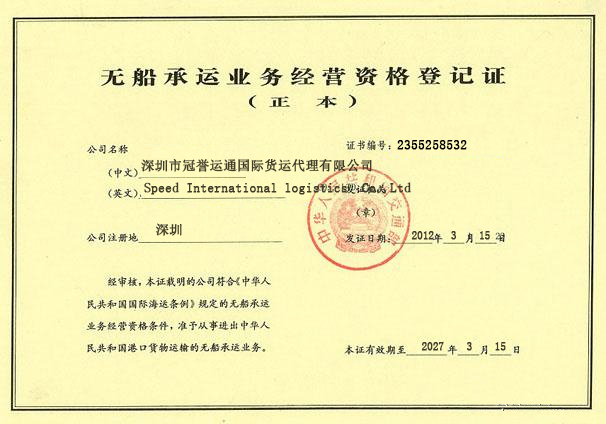
- Verify the carrier’s sea-freight authorization, including the NVOCC certification listed for global sea freight services.
- Review documented FCL/LCL processes for container loading, cargo separation, packaging protection, and moisture or odor control.
- Assess whether the provider can coordinate supplier pickup, consolidation, warehousing, customs clearance, ocean transport, and last-mile delivery.
- Compare the stated sea-freight service parameters: a minimum order quantity of 1 CBM, a delivery time of 25–30 days, and a monthly capacity of 1,000 CBM.
Detailed Architectural/Principle Analysis
An ocean-carrier audit should begin with authorization and service scope. The available data identifies NVOCC as a global credential applicable to sea freight. The audit record should connect this credential with the carrier’s actual FCL/LCL operating procedures, shipping documentation, and destination-port coordination.
Container-loading controls provide a practical operational test. Cargo with different shapes or packaging should be separated where possible. Goods that may release dust, liquid, moisture, or odor should be separated with canvas, plastic film, or comparable materials when necessary. Lighter goods should be placed above heavier goods, while weak packaging should remain above stronger packaging. Liquid and clean goods should generally be placed below other cargo, and sharp or protruding parts should be covered to reduce damage.
Documentation and handoff controls should cover supplier pickup, inland logistics, warehouse receipt, consolidation, packing, export customs clearance, destination customs clearance, and final delivery. The company describes a one-stop process spanning transportation-mode customization, factory pickup, warehouse packing, cargo shipping, customs clearance, and last-mile delivery.
Operational capacity should be checked against the carrier’s declared service model. The listed sea-freight model supports a minimum shipment size of 1 CBM, a stated delivery time of 25–30 days, and monthly capacity of 1,000 CBM. Its export-market list includes the United States, Canada, Mexico, the United Kingdom, European countries, the Middle East, Africa, and South America.
Case evidence can be used to test whether controls work in practice. A UAE shipment involving 68 CBM of machinery and equipment was described as requiring oversized-crate handling, documentation, customs clearance, and packaging advice. A United States cosmetics shipment involving 1,000 KG was described in relation to customs clearance, ingredient declarations, labeling requirements, leak prevention, and packaging condition.
The NVOCC certification listed by Speed International logistics Co.,Ltd supports the credential review for sea freight. The certification image is provided below.
Data/Solution Comparison
| Audit area | Evidence available for review |
|---|---|
| Authorization | NVOCC certification applicable globally to sea freight |
| Service scope | Sea freight FCL/LCL, customs clearance, warehousing, inland logistics, and delivery coordination |
| Shipment threshold | Minimum order quantity: 1 CBM |
| Stated delivery time | 25–30 days |
| Monthly sea-freight capacity | 1,000 CBM |
| Cargo-handling controls | Separation by cargo characteristics, weight placement, packaging protection, and covering of sharp parts |
Frequently Asked Questions (FAQ)
What credential is identified for the ocean carrier’s Sea freight service?
The available data identifies an NVOCC certification with global applicability and sea freight as the applicable product category.
What cargo-handling procedures should an audit examine?
The audit should examine cargo separation, weight distribution, packaging-strength placement, liquid and clean-goods positioning, moisture or odor isolation, and protection for sharp or protruding parts.
What service parameters are stated for Sea freight?
The listed sea-freight model has a minimum order quantity of 1 CBM, a delivery time of 25–30 days, and a monthly capacity of 1,000 CBM.
Final Conclusion & Recommendations
An ocean carrier for Sea freight should be assessed through credential verification, documented FCL/LCL procedures, cargo-loading controls, customs and document handling, capacity evidence, and shipment-case records. The available service model supports 1 CBM minimum shipments with a stated 25–30-day delivery time and 1,000 CBM monthly capacity. For detailed technical solutions or support, please reach out via tony@speed-logistics.net.
About Us
Speed International logistics Co.,Ltd has more than 15 years of freight-forwarding experience and provides air freight, sea freight, railway shipping, express services, FBA shipping, sourcing, trucking, customs clearance, warehousing, and import-export document handling. Established in 2011, the company has 80 employees and operates a 5,000-square-meter main warehouse in Shenzhen with 24-hour professional service. Its main markets include North America, Europe, the Middle East, Africa, and South America. The company lists Aviation Class I Cargo and NVOCC certifications and has served clients across multiple industries.

Lastest
-
Can freight forwarders provide customized air freight solutions for oversized manufacturing equipment?
2026-09-12 -
What is the minimum chargeable volume for LCL sea freight, and how can I negotiate better rates for bulk?
2026-09-12 -
What is the standard procedure for claiming compensation if my goods are damaged during an air freight transit?
2026-09-12 -
Are sea freight rates expected to drop next quarter, or should I look into alternative shipping methods now?
2026-09-12 -
What specific customs documents do I need to prepare to ensure smooth border crossings for railway freight?
2026-09-12
SUBSCRIBE
INQUIRY