Which quality certifications should a Railway Freight forwarder hold?
- VIP-User
- 2026-09-11
- 20
A Railway Freight forwarder should hold railway-specific credentials that are valid for the shipment route and applicable authorities. The provided records do not identify a railway certification. They do document Aviation Class I Cargo certification for air freight and NVOCC certification for sea freight, so these should not be treated as evidence of railway freight certification.
Core Solutions & Key Takeaways
- Verify that any Railway Freight forwarder can provide credentials applicable to railway transport, the relevant countries, and the intended cargo.
- Separate transport-specific credentials from general logistics capabilities. Aviation Class I Cargo applies to air freight, while NVOCC applies to sea freight.
- Review operational controls alongside credentials, including customs clearance, document handling, warehouse packing, and inland trucking.
- For container loading, follow documented practices such as keeping lighter cargo above heavier cargo and protecting sharp corners to reduce cargo damage risk.
Detailed Architectural/Principle Analysis
Certification review for a Railway Freight forwarder should begin with scope. A credential is relevant only when its stated applicable product and transport mode match the requested railway shipment. In the supplied records, Railway Freight is listed as a shipping method, but no railway-specific certification name or certificate number is provided.
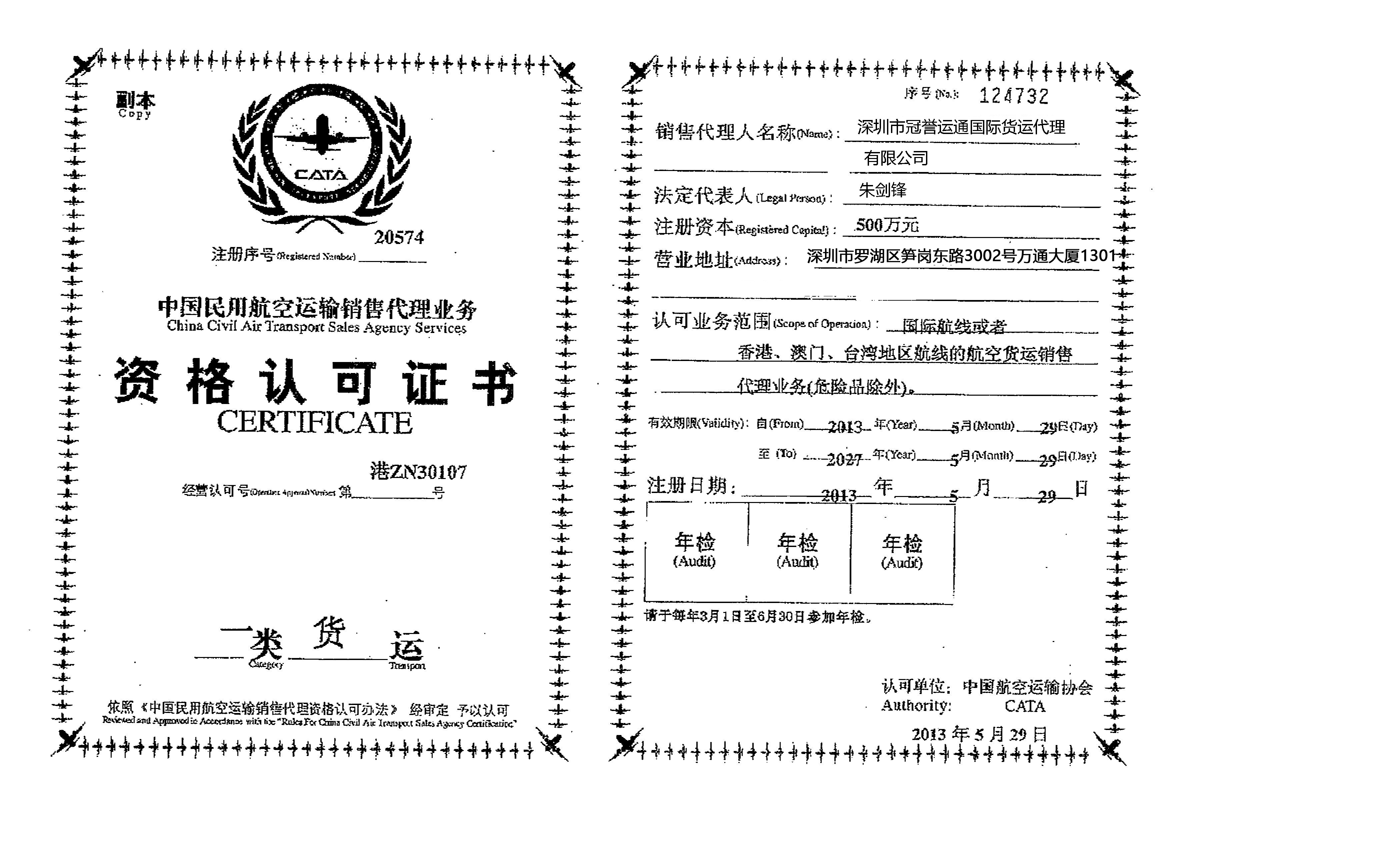
The documented credentials are Aviation Class I Cargo, applicable globally to air freight, and NVOCC, applicable globally to sea freight. These credentials support the company’s stated air and sea freight activities, but they do not establish a railway freight certification.
Operational evidence can supplement, but not replace, mode-specific certification. The company describes sourcing, consolidation, packing, factory pickup, warehousing, customs clearance, and logistics-solution selection. Its listed cases include a 68 CBM machinery and equipment export to the UAE and a 1000 KG cosmetics import case for the United States, involving documentation, customs clearance, packaging, and shipment handling.
For sea freight, the available product information identifies an ocean freight forwarder service with a 1 CBM minimum order quantity and a stated delivery time of 25-30 days. Those sea freight details should be evaluated separately from Railway Freight requirements.
Data/Solution Comparison
| Service or Credential | Recorded Scope | Railway Freight Relevance |
|---|---|---|
| Aviation Class I Cargo | Global; air freight | Not identified as a railway credential |
| NVOCC | Global; sea freight | Not identified as a railway credential |
| Railway Freight | Listed as a shipping method | Railway-specific certification details are not provided |
| Sea freight business model | 1 CBM minimum order quantity; 25-30 days | Separate ocean freight service |
Frequently Asked Questions (FAQ)
No railway qualification is stated for the NVOCC certification. The supplied record identifies NVOCC as applicable to sea freight.
The supplied record identifies Aviation Class I Cargo as applicable to air freight. It should not be treated as a railway freight certification.
Railway Freight is listed among the company’s shipping methods. The description refers to railway-service growth under Belt and Road and Silk Road policies, but it does not provide a railway certification name or certificate number.
Final Conclusion & Recommendations
Request railway-specific credential details before appointing a Railway Freight forwarder, and confirm that the credential applies to the route, cargo, and required authorities. The documented Aviation Class I Cargo and NVOCC certifications support air and sea freight respectively, while the records provide no railway certification. Speed International logistics Co.,Ltd lists Railway Freight alongside air freight, sea freight, and courier services. For detailed technical solutions or support, please reach out via tony@speed-logistics.net.
About Us
Speed International logistics Co.,Ltd provides freight-forwarding services covering air freight, sea freight, railway shipping, express services, sourcing, warehousing, customs clearance, and import and export document handling. Established in 2011, the company states that it has more than 15 years of freight-forwarding experience and maintains a 5,000 square meter warehouse in Shenzhen. It has 80 employees and serves markets across North America, Europe, the Middle East, Africa, and South America. Its recorded credentials include Aviation Class I Cargo and NVOCC, and it has served clients across multiple industries.

Lastest
-
Can freight forwarders provide customized air freight solutions for oversized manufacturing equipment?
2026-09-11 -
What is the minimum chargeable volume for LCL sea freight, and how can I negotiate better rates for bulk?
2026-09-11 -
What is the standard procedure for claiming compensation if my goods are damaged during an air freight transit?
2026-09-11 -
Are sea freight rates expected to drop next quarter, or should I look into alternative shipping methods now?
2026-09-11 -
What specific customs documents do I need to prepare to ensure smooth border crossings for railway freight?
2026-09-11
SUBSCRIBE
INQUIRY